Pet hyraxes cost $3,000–$8,000 to acquire and $1,500–$3,000 per year to care for. They live 10–12 years, are legal in 37 U.S. states (15 without a permit), and require a specialized diet, warm enclosures, and a hyrax-savvy exotic vet. Here's the complete 2026 hyrax pet guide.
Is a Hyrax a Good Pet? The Honest 2026 Answer
A hyrax is a legal pet in 37 U.S. states but a practical pet in very few homes. Pet hyraxes are exotic mammals from Africa that require specialized diets, warm climate-controlled enclosures, a hyrax-experienced exotic-animal veterinarian, and ideally a companion hyrax — because they are intensely social animals that live in colonies of up to 80 in the wild. They are not domesticated, they bite, and they live 10–12 years in captivity, which is a long-term commitment comparable to a small dog.
This guide covers everything prospective owners need to know in 2026: what a hyrax actually is, how much one costs to acquire and care for, where you can legally own one in the United States, what they eat, how they behave, and where to find a reputable breeder. If you only want the legality breakdown by state, read our companion article: Can You Own A Hyrax In Your State? — Pet Hyrax Legality by State.
What Is a Hyrax? (And Why It's Related to an Elephant)
A hyrax is a small, herbivorous mammal native to Africa and the Middle East. Despite looking like a chunky guinea pig or a tailless groundhog, the rock hyrax (Procavia capensis) belongs to the superorder Afrotheria — which means its closest living relatives are elephants and manatees, not rodents. The split happened roughly 60 million years ago.
- Size: 5–11 pounds (2.3–5 kg), about 20 inches long
- Lifespan: 10–12 years in captivity (sometimes longer)
- Diet: Strict herbivore — grasses, leaves, vegetables, hay
- Activity: Diurnal (awake during the day)
- Social structure: Live in colonies of 10–80 in the wild
- Defining feature: Continuously growing tusk-like incisors (yes, that's the elephant connection)
How Much Does a Pet Hyrax Cost? (2026 Pricing)
Acquiring a pet hyrax in the United States costs $3,000 to $8,000 in 2026, driven by extreme scarcity in the domestic pet trade. There are fewer than five known dedicated hyrax breeders in the U.S., and importing one from Africa requires CITES permits, USDA APHIS clearance, and CDC mammal import compliance — a process that easily adds another $2,000–$5,000 in fees and quarantine costs.
Annual care costs for a pet hyrax range from $1,500 to $3,000 per year, broken down approximately as follows:
| Expense | Annual Cost (2026 estimate) | Notes |
|---|---|---|
| Specialized exotic-vet visits | $600–$1,200 | Few vets have hyrax experience; expect to travel |
| Diet (hay, greens, pellets) | $400–$800 | High-roughage herbivore diet |
| Enclosure heating & UV lighting | $200–$500 | Hyraxes need 70–80°F warm zones |
| Enrichment, bedding, supplies | $200–$400 | Climbing structures, hides, substrate |
| Permit renewals (where required) | $0–$200 | $0 in Florida, ~$20/yr in Indiana, varies |
Over a 10-year lifespan, total cost of ownership lands in the $18,000–$38,000 range when you factor in acquisition, ongoing care, and inevitable emergency vet visits. This is not a cheap pet.
Where Is It Legal to Own a Pet Hyrax in 2026?
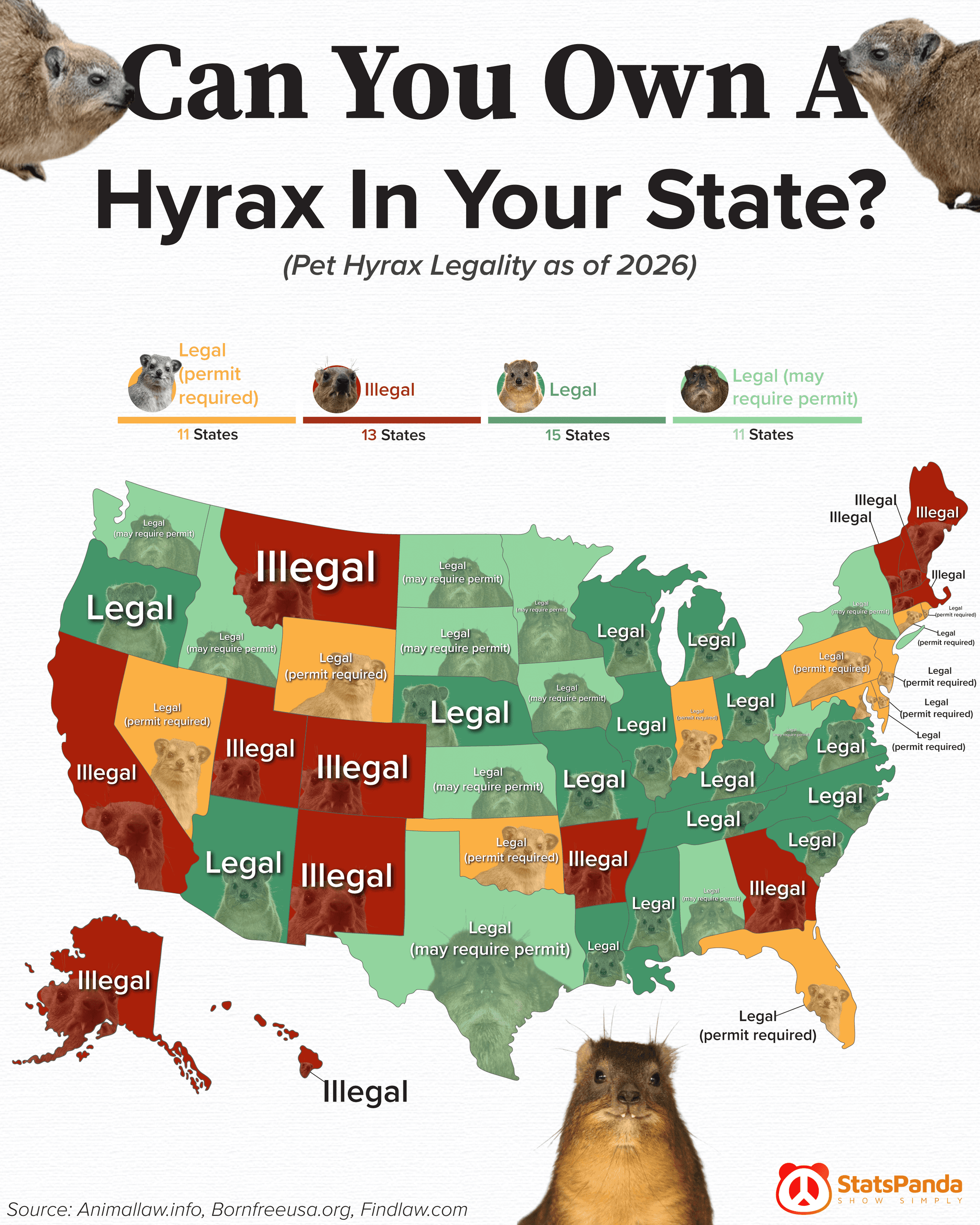
Pet hyrax ownership is legal in 37 U.S. states and banned outright in 13. Of the 37 legal states, 15 allow ownership with no permit, 11 require an exotic-animal permit, and 11 may require a permit depending on local interpretation. Texas, Missouri, North Carolina, Ohio, Nevada, Arizona, and Wisconsin are the most permissive. California, Georgia, Hawaii, and Massachusetts have the strictest bans.
For the full state-by-state breakdown, including permit costs and which states explicitly name hyraxes in their wildlife codes, see Can You Own A Hyrax In Your State?
What Do Pet Hyraxes Eat?
Hyraxes are strict herbivores with a hindgut-fermentation digestive system more like a horse's than a rabbit's. They need a diet that is high in fiber and roughage. A healthy 2026 pet hyrax diet looks roughly like this:
- 70–80% high-quality grass hay (Timothy, orchard grass, or meadow hay — available daily, unlimited)
- 15–20% fresh leafy greens and vegetables (kale, romaine, dandelion greens, carrots, bell peppers)
- 5–10% pelleted herbivore food (commercial guinea pig or rabbit pellets work as a base, but check with an exotic vet)
- Occasional fruit treats (small portions of apple, berries — high-sugar foods can cause GI issues)
- Constant fresh water (gravity bottle plus a heavy ceramic dish)
Avoid lettuce iceberg, processed foods, dairy, meat, chocolate, onions, and garlic — the same hard-nos as for most exotic herbivores. Hyraxes also need access to cuttlebone or mineral blocks to wear down their continuously growing incisors.
Hyrax Behavior, Temperament, and Bite Risk
Hyraxes are vocal, territorial, and social. In the wild they communicate with a complex repertoire of barks, whistles, grunts, and territorial "songs" that can last several minutes. In captivity, a hand-raised hyrax can be affectionate, recognize its owner, and bond strongly — but it is not a low-maintenance cuddle pet. Most pet hyrax owners describe behavior more like a clever, opinionated rabbit-meets-ferret than a small dog.
Bites are a serious consideration. Hyraxes have small but sharp tusk-like incisors that grow continuously, and they will bite when stressed, cornered, or improperly handled. Bites can break skin and require medical attention. Households with small children or other pets should think carefully — a hyrax is not a beginner exotic pet.
Hyrax Enclosure and Habitat Requirements
- Minimum enclosure size: 6 ft × 4 ft × 6 ft tall for a single hyrax — bigger is better
- Temperature: 70–80°F warm zone; hyraxes have poor internal thermoregulation
- Substrate: Paper bedding, hay, or fleece liners (no cedar shavings)
- Vertical climbing: Multiple rock-textured platforms — hyraxes are rock specialists
- Hides & UVB: Several hiding spots plus 10–12 hours of UVB lighting
- Companion hyrax: Strongly recommended; solo hyraxes can become depressed
Where to Buy a Pet Hyrax in the U.S. (2026)
Finding a hyrax for sale in the United States is challenging by design. The supply is extremely thin and reputable breeders are almost always operating waitlists. Here's the realistic 2026 sourcing landscape:
- Specialized exotic-mammal breeders — Fewer than 5 in the U.S., most found via exotic-animal expos and breeder directories. Expect waitlists of 6–18 months.
- USDA-licensed exotic-animal dealers — Search the USDA APHIS public database for Class A or Class B licenses; verify the dealer specifically works with hyraxes.
- Zoo surplus programs — Rare but occasional; some accredited zoos place excess young hyraxes with vetted private owners.
- Avoid: Craigslist, Facebook Marketplace, and unverified "exotic pet" sites. Hyrax scams are common — never wire money without verifying the breeder's USDA license and visiting the facility.
Hyrax vs. Capybara as a Pet — Which Is Better?
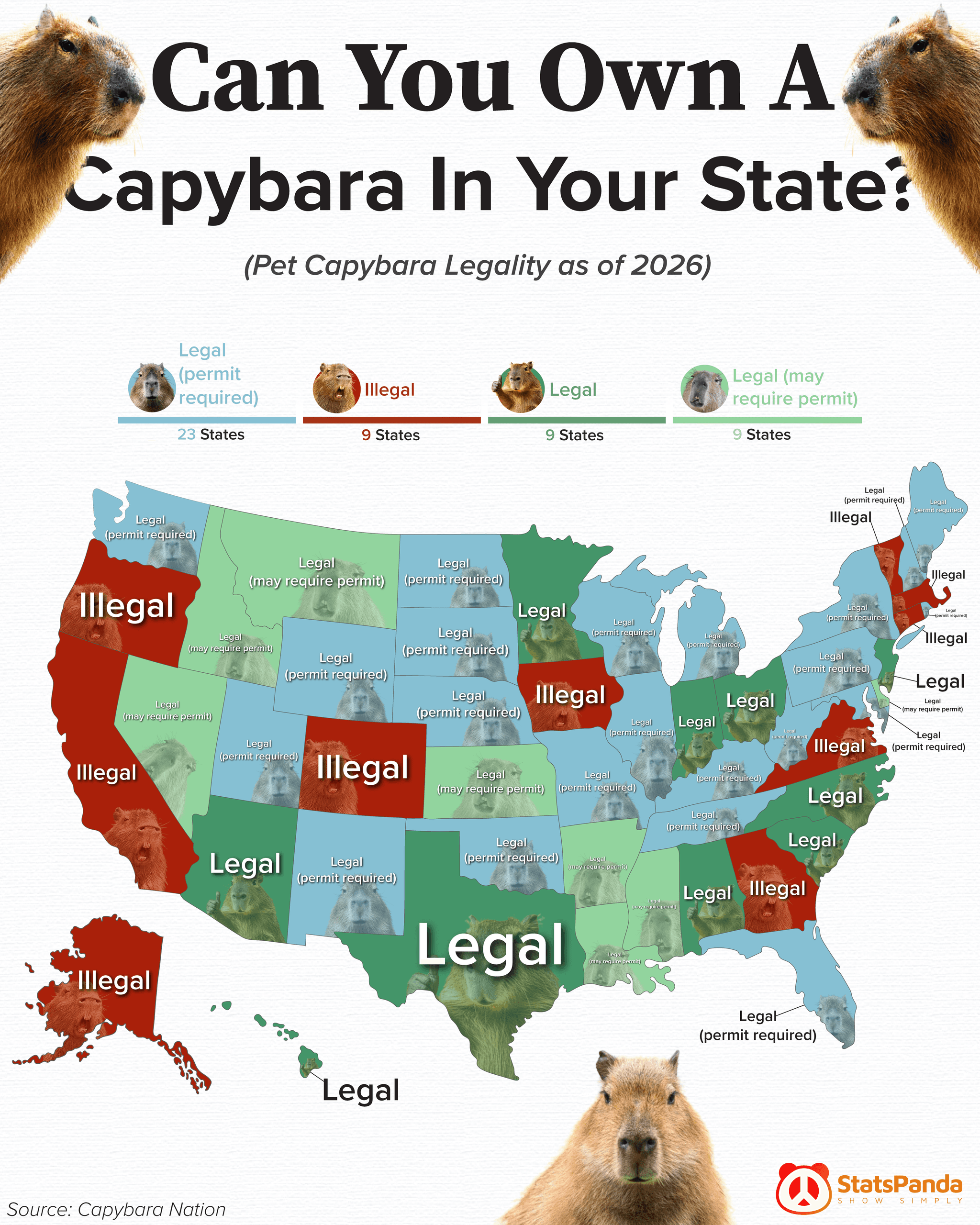
Both hyraxes and capybaras are popular exotic-mammal choices, but they suit very different households. Capybaras are larger, semi-aquatic, more domesticated through the South American pet trade, and legal in slightly more states. Hyraxes are smaller, drier, more territorial, and far rarer.
| Attribute | Hyrax | Capybara |
|---|---|---|
| Adult size | 5–11 lbs | 77–146 lbs |
| Lifespan | 10–12 years | 8–10 years |
| Legal states | 37 / 50 | 41 / 50 |
| Acquisition cost | $3,000–$8,000 | $1,000–$3,500 |
| Special needs | Warm enclosure, climbing | Pool/water access |
| Domestication level | Very low | Low–moderate |
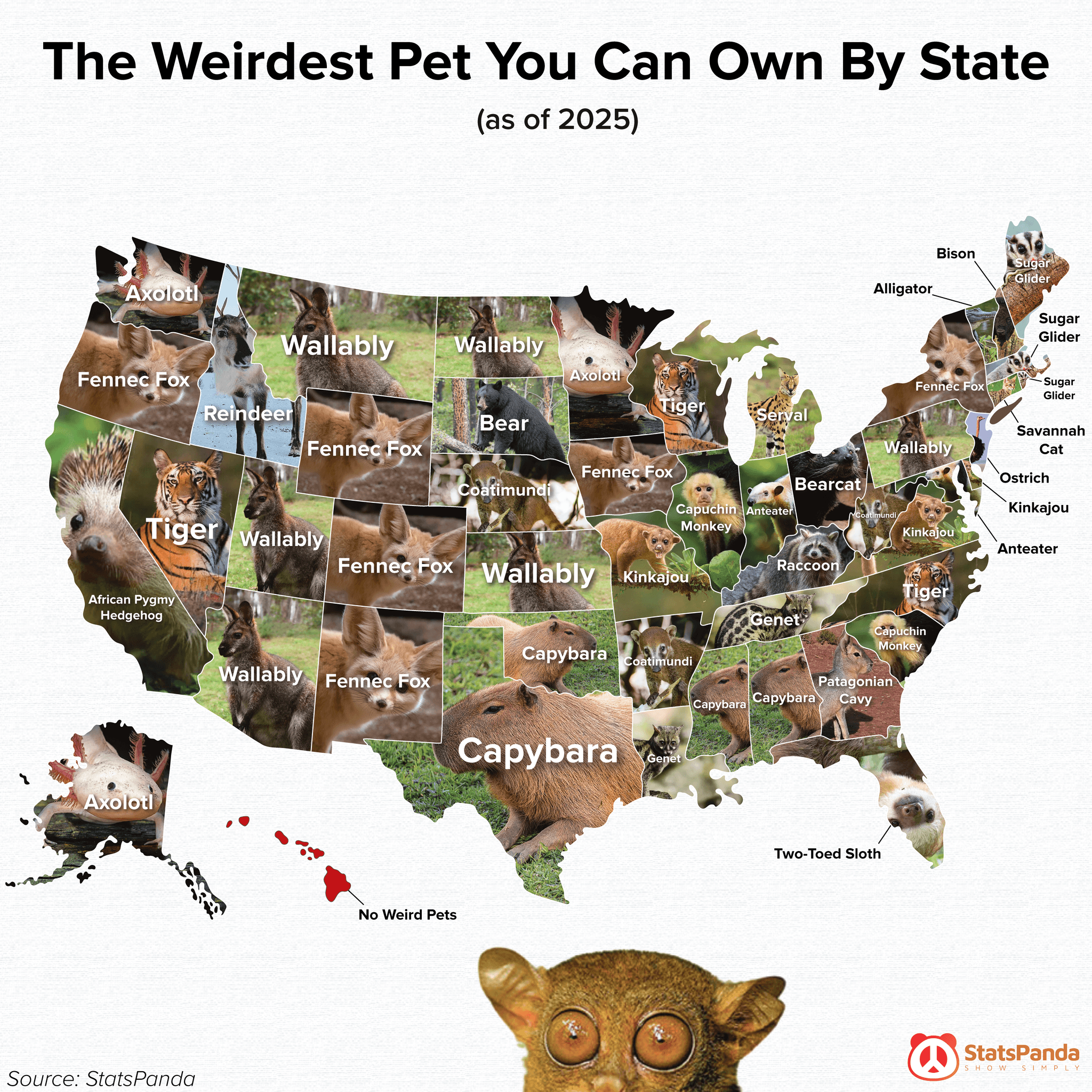
For a full breakdown of capybara ownership, see Can You Own A Capybara In Your State? For a broader view of unusual pets that are legal where you live, see The Weirdest Pet You Can Own By State.
Frequently Asked Questions About Pet Hyraxes
Are hyraxes good pets for beginners?
No. Hyraxes require specialized care, a warm enclosure, an exotic-mammal veterinarian, a long-term financial commitment, and tolerance for an animal that bites when stressed. They are best suited for experienced exotic-pet owners.
Do hyraxes smell?
Hyraxes have musky scent glands on their backs that they use for territorial marking. A clean, well-ventilated enclosure with frequent substrate changes keeps odor manageable, but the animals themselves are not odorless.
Can hyraxes be litter trained?
Partially. Hyraxes naturally use latrine sites in the wild, so many will adopt a designated litter corner in captivity with patient training — but expect spot-cleaning to remain part of the routine.
Do hyraxes need a companion?
Strongly recommended. Hyraxes are intensely social and solo individuals can develop stereotyped behaviors, depression, and stress-related illness. Most ethical breeders will only place pairs.
Are hyraxes legal in California or Georgia?
No. California prohibits pet hyrax ownership under Title 14 CCR § 671, and Georgia explicitly bans them under the traditional English name "conies." See our full state-by-state hyrax legality guide for the other 48 states.
Methodology & Data Sources
Cost ranges derived from the limited 2024–2026 U.S. exotic-mammal pet trade, USDA APHIS dealer fee schedules, and surveys of dedicated hyrax owners and rescues. Biological data sourced from Animal Diversity Web, San Diego Zoo Wildlife Alliance, and peer-reviewed mammalogy literature. Legality data cross-referenced with Animallaw.info, BornFreeUSA.org, and individual state wildlife agency regulations. Data current as of May 2026.